We provide 24/7 client support for all acoustic solutions, addressing queries, guidance, and service needs anytime, ensuring complete satisfaction.
Envirco Solutions - Architectural Acoustics Treatments & Noise Pollution Control Solution
We'are Open: Mon - Sat 9:00 - 19:00

- 24/7
Customer Service
- ISO 9001
Certification Company
- Qualified
Expert Professional

Acoustic Wooden Doors, STC Ratings & Soundproof Door Performance
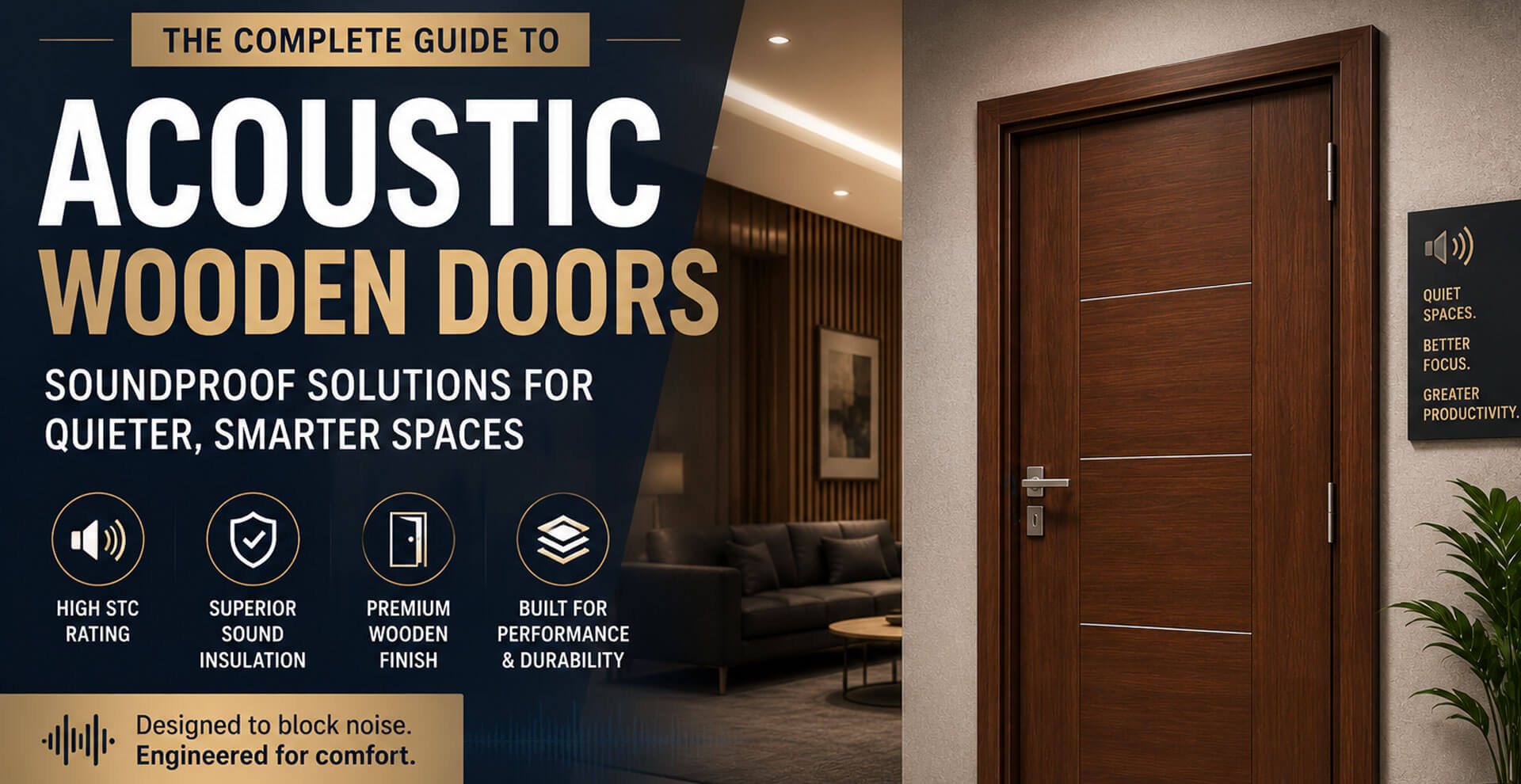
Complete Guide to Acoustic Wooden Doors, Soundproof Wooden Doors & STC Ratings
In modern architectural and commercial environments, controlling unwanted noise is essential for improving comfort, privacy, productivity, and communication. Whether it is a corporate office, conference room, recording studio, educational institution, hospital, hotel, auditorium, or home theatre, effective sound insulation plays a crucial role in creating functional spaces. One of the most important components of any acoustic treatment system is the acoustic wooden door.
An acoustic wooden door is a specially engineered soundproof door designed to reduce sound transmission between adjacent rooms and spaces. Unlike standard wooden doors, acoustic doors are manufactured using high-density core materials, reinforced frames, advanced sealing systems, and specialised construction techniques that significantly improve sound insulation performance.
For a broader look at soundproof door applications across offices, studios, commercial buildings and specialised spaces, explore our soundproof door solutions.
These wooden acoustic doors are commonly installed in buildings where privacy, speech intelligibility, and noise control are critical. When integrated with acoustic wall panels, ceiling acoustic panels, and fabric acoustic panels, they form part of a complete acoustic treatment solution.
What Is an Acoustic Wooden Door?
An acoustic wooden door is a high-performance door system specifically designed to minimise airborne sound transmission. These doors provide significantly higher sound insulation compared to conventional wooden doors and are available in various Sound Transmission Class (STC) ratings depending on project requirements.
The primary objective of an acoustic wooden door is to create an effective barrier against unwanted noise while maintaining the appearance, durability, and functionality of a premium architectural door. Acoustic doors are manufactured using dense core materials and perimeter sealing systems that prevent sound leakage through gaps around the door frame.
Today, soundproof acoustic doors are widely used in commercial, institutional, industrial, and residential projects where controlled acoustics are required.
Why Acoustic Wooden Doors Are Important
Many buildings invest in acoustic wall treatments and ceiling systems but overlook the impact of doors on overall acoustic performance. Even a small gap around a standard door can allow significant sound leakage, reducing the effectiveness of the entire acoustic treatment system.
Acoustic wooden doors help eliminate this problem by creating a sealed barrier that prevents sound transmission between spaces. They improve privacy, reduce distractions, and enhance speech clarity, making them essential in environments where noise control is important.
- Improves speech privacy
- Reduces external noise intrusion
- Enhances concentration and productivity
- Supports professional acoustic environments
- Improves overall building comfort
- Complements acoustic wall and ceiling treatments
For spaces requiring advanced sound control, acoustic doors are often combined with acoustic sliding folding partitions and specialised wall systems to create complete noise-control environments.
How Acoustic Wooden Doors Work
The performance of a wooden acoustic door depends on several engineering principles. Acoustic doors are designed to block, absorb, and isolate sound energy before it passes through the door assembly.
Unlike conventional doors, acoustic doors use dense core materials and specialised seals to eliminate weak points where sound can travel. Every component of the door contributes to its sound insulation capability.
1. High-Density Core Construction
The core is the most important component of an acoustic door. High-density cores increase mass, which helps block airborne sound transmission. Materials commonly used include engineered timber, acoustic composite boards, MDF layers, and specialised sound-insulating materials.
2. Acoustic Perimeter Seals
Sound leakage often occurs through gaps around door edges. Acoustic doors use perimeter gaskets and compression seals that create airtight closure when the door is shut.
3. Automatic Drop Seals
Drop seals automatically lower when the door closes, sealing the gap between the bottom of the door and the floor. This significantly improves sound insulation performance.
4. Reinforced Door Frames
Acoustic door frames are specially designed to support the heavier door leaf while maintaining alignment and sealing performance over time.
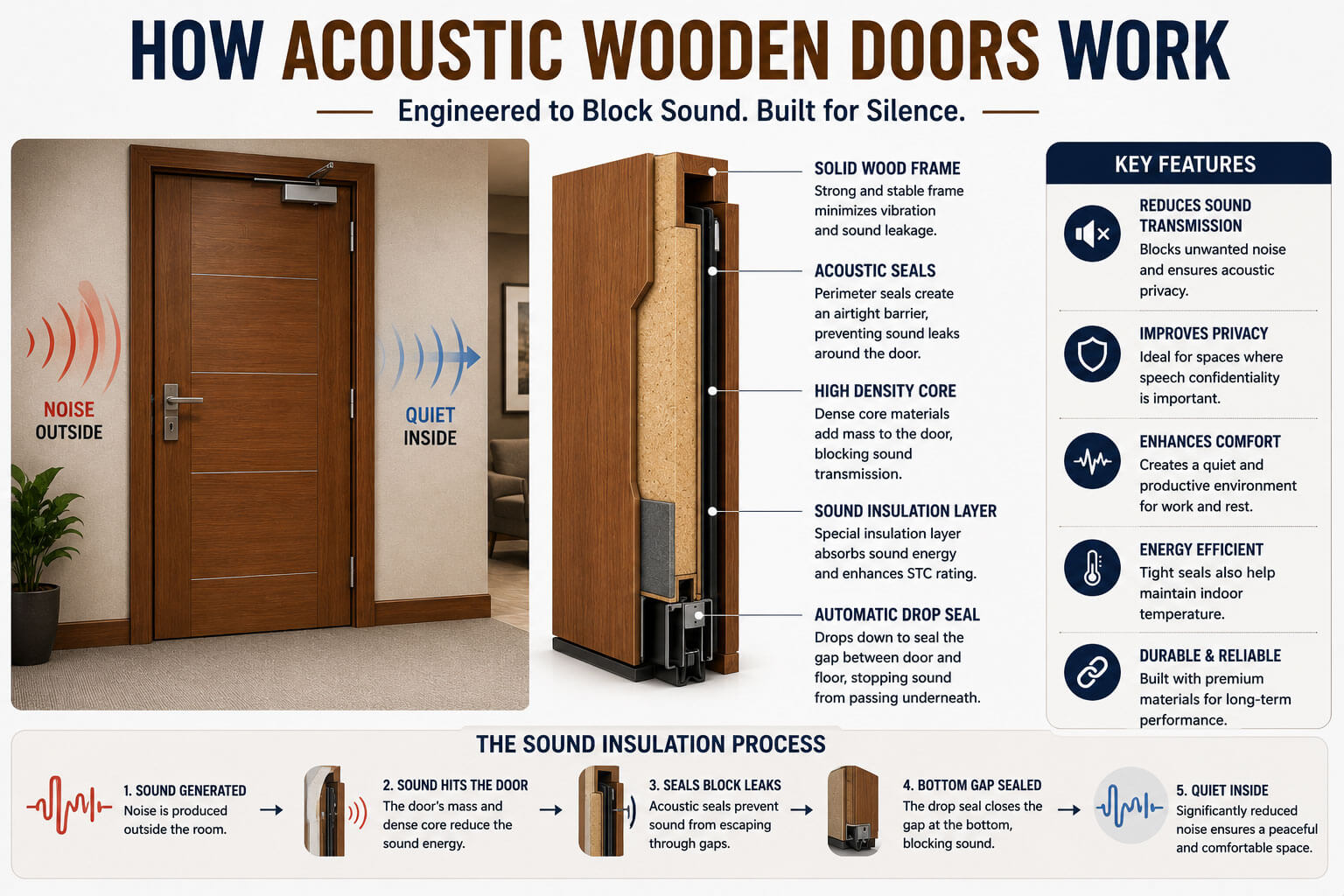
Components of a Wooden Acoustic Door
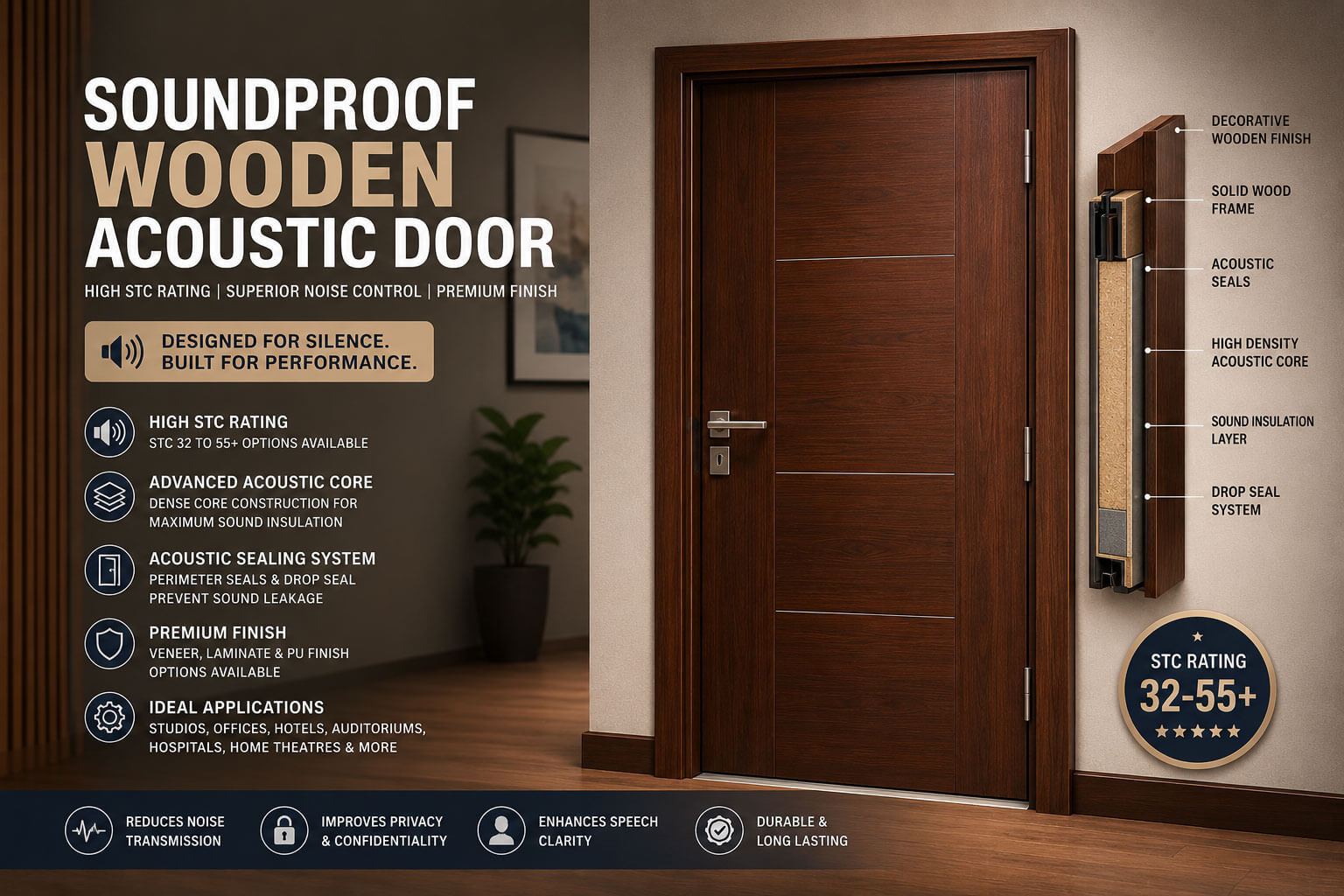
A high-quality acoustic wooden door consists of several specialised components that work together to achieve the desired STC rating and acoustic performance.
- High-density acoustic core
- Solid timber or engineered frame
- Acoustic perimeter seals
- Automatic drop seals
- Heavy-duty hinges
- Acoustic locksets and hardware
- Decorative surface finish
- Sound-insulating reinforcement layers
Each component must be carefully selected and installed to ensure consistent soundproofing performance.
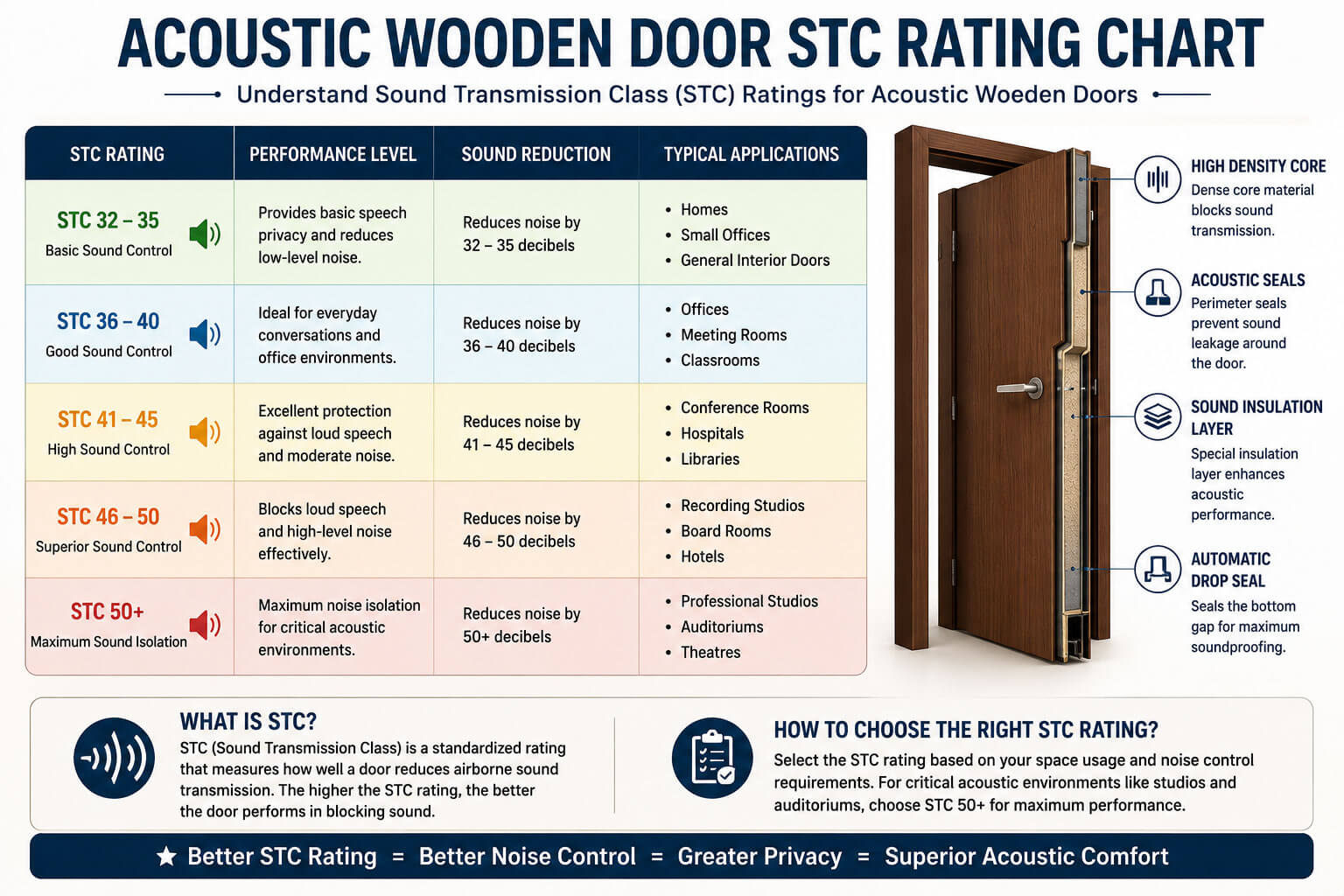
Understanding STC Ratings for Acoustic Wooden Doors
Sound Transmission Class (STC) is the most widely used measurement for evaluating acoustic door performance. STC ratings indicate how effectively a door reduces airborne sound transmission.
| STC Rating | Performance Level |
|---|---|
| STC 32–35 | Basic speech privacy |
| STC 36–40 | Good office sound control |
| STC 41–45 | High-performance acoustic separation |
| STC 46–50 | Professional sound isolation |
| STC 50+ | Studio and auditorium applications |
Selecting the correct STC rating depends on the building's acoustic requirements and intended use.
Acoustic Wooden Door vs Standard Wooden Door
Many project owners assume that a thick wooden door automatically provides soundproofing. However, standard doors are not designed for acoustic performance and typically allow significant sound leakage.
| Feature | Acoustic Wooden Door | Standard Wooden Door |
|---|---|---|
| Sound Insulation | High | Low |
| Acoustic Seals | Included | Not Included |
| STC Rating | 32–55+ | 20–25 |
| Noise Control | Excellent | Limited |
| Application | Professional Acoustic Spaces | General Use |
This difference explains why acoustic wooden doors are preferred in environments where privacy and sound control are essential.
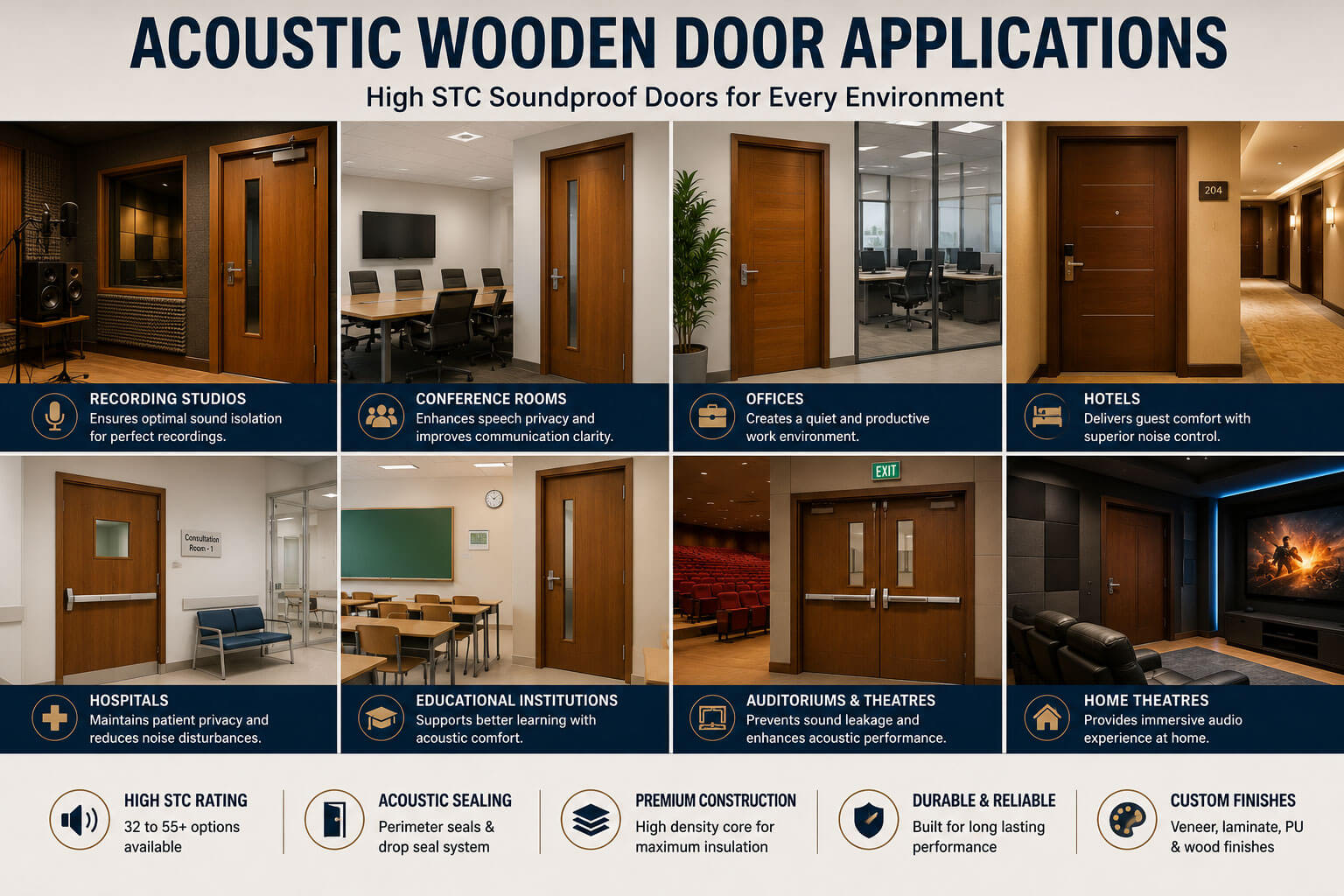
Applications of Acoustic Wooden Doors
The versatility of acoustic wooden doors makes them suitable for a wide range of commercial and institutional applications.
- Recording Studios
- Broadcast Facilities
- Corporate Offices
- Boardrooms
- Conference Rooms
- Hotels
- Hospitals
- Educational Institutions
- Auditoriums
- Theatres
- Home Theatres
- Training Centres
In large performance venues, acoustic doors are frequently installed alongside auditorium acoustic solutions to maintain optimum sound quality and minimise external noise interference.
Benefits of Wooden Acoustic Soundproof Doors
Modern wooden acoustic soundproof doors provide numerous benefits beyond simple noise reduction.
- Enhanced privacy
- Improved communication clarity
- Reduced distractions
- Professional acoustic performance
- Premium architectural appearance
- Long-term durability
- Customisable finishes
- Compatibility with acoustic treatment systems
As building standards increasingly focus on occupant comfort and productivity, the demand for high-performance acoustic wooden doors continues to grow across commercial, educational, healthcare, and hospitality sectors.
Choosing the Right Acoustic Wooden Door
Selecting the correct acoustic wooden door involves evaluating acoustic requirements, STC ratings, usage patterns, aesthetics, hardware specifications, installation conditions, and project budget. Working with an experienced manufacturer ensures that the chosen solution delivers reliable long-term performance while meeting architectural and acoustic objectives.
Before selecting an acoustic door, project teams should consider the required level of sound isolation, door size and configuration, surrounding wall construction, sealing requirements, hardware, finish, and whether additional fire-performance requirements apply.
Types of Acoustic Wooden Doors
Acoustic wooden doors are available in various configurations to meet different sound insulation requirements. The selection depends on the desired STC rating, application, budget, and architectural specifications. Choosing the correct door type ensures optimum acoustic performance while maintaining aesthetics and durability.
Single Leaf Acoustic Wooden Doors
Single leaf acoustic doors are commonly used in offices, conference rooms, educational institutions, hospitals, and commercial interiors. These doors provide effective sound insulation while occupying minimal space. They are suitable for different acoustic performance requirements depending on their construction, seals, frame, and tested configuration.
Double Leaf Acoustic Wooden Doors
Double leaf acoustic doors are designed for larger openings and are commonly installed in auditoriums, theatres, banquet halls, and convention centres. They provide wider access while maintaining acoustic separation between spaces when properly engineered and sealed.
Studio Acoustic Doors
Recording studios and broadcast facilities require specialised acoustic doors capable of preventing sound leakage and external noise intrusion. These doors are designed for high sound isolation and are used alongside acoustic wall panels and fabric acoustic panels as part of a complete acoustic treatment system.
Wooden Acoustic Fire Doors
For projects requiring both fire protection and acoustic performance, wooden acoustic fire doors provide a combined solution. These doors are suitable for applications where sound insulation and fire-performance requirements need to be considered together, including hotels, hospitals, educational institutions, commercial buildings, and public facilities.
Soundproof Acoustic Doors for Commercial Buildings
Commercial environments often require effective noise control to improve productivity, privacy, and user comfort. Soundproof acoustic doors help create professional environments by reducing unwanted sound transmission between adjacent spaces.
Common commercial applications include:
- Corporate Offices
- Boardrooms
- Conference Rooms
- Meeting Spaces
- Hotels
- Hospitals
- Educational Facilities
- Training Centres
- Government Buildings
These facilities often combine acoustic doors with ceiling acoustic panels, acoustic hanging baffles, and acoustic sliding folding partitions to create comprehensive sound-control systems.
Acoustic Wooden Doors for Studios and Recording Rooms
Recording studios demand some of the highest levels of sound isolation. Even minor sound leakage can negatively impact recording quality and overall acoustic performance.
Professional studio acoustic doors are manufactured with:
- Extra-high-density cores
- Multiple sealing layers
- Specialised acoustic hardware
- Heavy-duty acoustic frames
- Advanced vibration isolation systems
When integrated with acoustic PU foam and professional acoustic treatment systems, studio acoustic doors help achieve controlled recording conditions.
Acoustic Wooden Doors for Auditoriums and Theatres
Auditoriums, theatres, and performance venues require carefully controlled acoustic environments. Audience comfort, speech intelligibility, and sound quality depend on effective acoustic design.
Acoustic wooden doors play an important role in preventing external noise from entering performance spaces and stopping internal sound from escaping into surrounding areas.
For optimum results, these doors are often combined with auditorium acoustic solutions, acoustic wall treatments, and ceiling sound absorption systems.
Technical Specifications of Acoustic Wooden Doors
Technical performance varies according to project requirements and the tested door configuration. However, high-quality acoustic wooden doors can include the following specifications:
| Parameter | Typical Specification |
|---|---|
| STC Rating | 32–55+ |
| Door Thickness | 45mm–100mm |
| Core Material | High Density Acoustic Composite |
| Frame Type | Solid Timber / Engineered Frame |
| Sealing System | Acoustic Gaskets & Drop Seals |
| Finish Options | Laminate, Veneer, PU Finish |
The final specification should be selected according to the required acoustic performance, opening size, wall construction, hardware requirements, finish, and project conditions.
Installation Best Practices
Even the highest-performing acoustic wooden door can underperform if installation is not carried out correctly. Proper alignment, sealing, and frame installation are essential to achieving the specified acoustic performance.
Professional installation includes:
- Accurate frame positioning
- Proper perimeter sealing
- Correct drop seal adjustment
- Precision hardware installation
- Acoustic gap treatment
- Performance testing where required
A poorly installed door may allow sound leakage, reducing overall acoustic effectiveness regardless of door construction quality.
Factors Affecting Acoustic Door Performance
Several factors influence the effectiveness of acoustic wooden doors:
- Door mass and density
- Core material composition
- Quality of acoustic seals
- Frame construction
- Hardware quality
- Installation accuracy
- Wall construction surrounding the door
Achieving high sound insulation requires all these elements to work together as part of a complete acoustic system.
Common Mistakes When Selecting Acoustic Doors
Many project owners make decisions based solely on door thickness or appearance. However, effective acoustic performance depends on much more than visual design.
Common mistakes include:
- Choosing standard wooden doors instead of acoustic doors
- Ignoring STC requirements
- Overlooking seal quality
- Improper installation practices
- Using acoustic doors with untreated walls and ceilings
- Selecting incorrect hardware systems
Avoiding these mistakes helps ensure long-term acoustic performance and user satisfaction.
Acoustic Wooden Door Manufacturer in India
Choosing the right acoustic wooden door requires more than selecting a heavy or thick door. Overall sound insulation performance depends on the door core, frame construction, acoustic seals, hardware, installation quality, surrounding wall construction, and the required STC rating. For this reason, commercial and institutional projects should select an acoustic door system based on the actual acoustic requirements of the space.
Envirco Solutions provides customised acoustic wooden doors in India for offices, conference rooms, recording studios, hotels, hospitals, educational institutions, auditoriums, theatres, and other sound-controlled environments. Our soundproof wooden acoustic doors are designed with high-density core materials, reinforced frames, perimeter acoustic seals, and drop seals to minimise sound transmission through the door assembly.
Depending on the application, acoustic wooden doors can be customised according to STC rating, door dimensions, thickness, finish, frame construction, hardware and sealing requirements. Proper selection and installation are particularly important where the door forms part of a larger acoustic treatment or soundproofing system.
For detailed product information, specifications, available acoustic performance options, and project-specific requirements, explore our acoustic wooden door solutions for soundproofing and noise control for commercial and institutional applications.
For projects that require both sound insulation and fire protection, you can also explore our wooden acoustic fire door solutions.
Why Choose Envirco Solutions?
Envirco Solutions offers high-performance acoustic wooden doors backed by technical expertise and experience in architectural acoustics. Our solutions are developed to provide sound insulation, durability, and aesthetic integration for modern commercial and institutional projects.
- Custom Acoustic Performance Requirements
- Premium Acoustic Construction
- Multiple Finish Options
- Professional Technical Support
- Project-Specific Solutions
- Reliable Installation Guidance
- Nationwide Project Support
In addition to acoustic wooden doors, we provide a complete range of acoustic solutions including wood wool acoustic panels, micro perforated wooden acoustic panels, acoustic ceilings, partitions, and sound absorption systems.
Frequently Asked Questions
What is the difference between an acoustic wooden door and a standard wooden door?
Acoustic wooden doors are specifically engineered for sound insulation and incorporate dense acoustic cores, specialised seals, and reinforced frames. Standard doors do not provide comparable acoustic performance.
Are acoustic wooden doors completely soundproof?
While no door is completely soundproof, properly designed acoustic wooden doors significantly reduce sound transmission and can provide high levels of noise isolation when correctly specified and installed.
What STC rating should I choose?
The required STC rating depends on the intended application and the overall construction of the space. Offices may require moderate sound insulation, while recording studios, theatres, and other specialised spaces may require higher-performance acoustic door systems.
Can acoustic wooden doors be customised?
Yes. Acoustic wooden doors can be customised in size, thickness, finish, frame construction, hardware, sealing systems, and acoustic performance according to project requirements.
Where can acoustic wooden doors be installed?
They are widely used in offices, hotels, hospitals, educational institutions, conference rooms, studios, theatres, auditoriums, training centres, and residential home theatres where sound control and privacy are important.
Conclusion
Acoustic wooden doors are an essential component of modern sound-control systems. Whether installed in offices, hotels, studios, auditoriums, hospitals, or educational institutions, they can provide effective sound reduction, improved privacy, and enhanced acoustic comfort when properly designed and installed.
By selecting the appropriate acoustic performance, ensuring proper installation, and integrating acoustic doors with complementary solutions such as acoustic wall panels, ceiling systems, and partitions, project owners can create environments that support productivity, communication, and user comfort.
If you are planning an acoustic project, explore our acoustic wooden door solutions for soundproofing and noise control to find the right door system for your requirements.
Round-the-Clock Client Assistance
Creative Acoustic Designs
We deliver innovative acoustic solutions blending functionality and aesthetics, enhancing sound quality while elevating the visual appeal of any interior space.
Trusted Acoustic Safety
Our acoustic solutions ensure reliable safety, combining high-quality materials and expert installation to reduce noise hazards and protect every environment.