We provide 24/7 client support for all acoustic solutions, addressing queries, guidance, and service needs anytime, ensuring complete satisfaction.
Envirco Solutions - Architectural Acoustics Treatments & Noise Pollution Control Solution
We'are Open: Mon - Sat 9:00 - 19:00

- 24/7
Customer Service
- ISO 9001
Certification Company
- Qualified
Expert Professional

Ceiling Acoustic Tiles: Types, Benefits, NRC Ratings & Installation
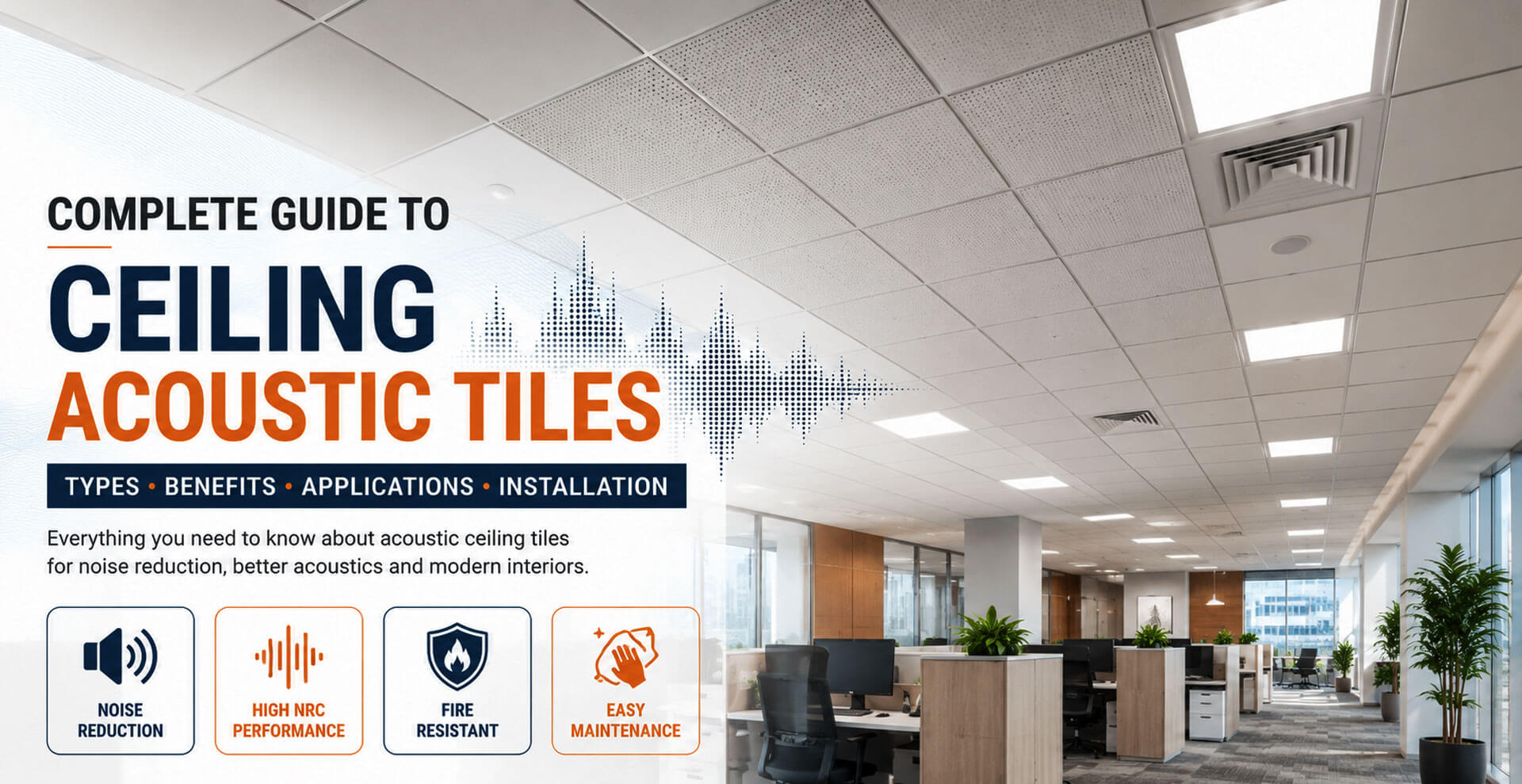
Ceiling Acoustic Tiles: Types, Benefits, NRC Ratings & Installation Guide
Ceiling acoustic tiles are designed to help control reflected sound, excessive reverberation and poor speech clarity in indoor spaces. They are commonly considered for offices, conference rooms, educational institutions, healthcare facilities, hospitality environments, auditoriums and other commercial interiors where acoustic comfort is important.
Modern buildings often contain hard surfaces such as glass, concrete, metal, stone and exposed ceilings. These surfaces can reflect sound and increase reverberation, making conversations, presentations and announcements more difficult to understand. Acoustic ceiling tiles introduce sound-absorbing surfaces that can help manage these reflections.
This guide explains the main types of acoustic ceiling tiles, how they work, NRC ratings, applications, installation considerations and the factors to consider when selecting a suitable ceiling acoustic solution.
If you are evaluating a broader ceiling treatment approach, you can also explore our ceiling acoustic panel solutions for offices, auditoriums, conference rooms, educational spaces and other commercial interiors.
What Are Ceiling Acoustic Tiles?
Ceiling acoustic tiles are sound-absorbing ceiling elements designed to reduce the amount of sound energy reflected back into a room. They are commonly installed within suspended ceiling systems, although specific acoustic tile products may also be available in other mounting configurations.
Unlike conventional hard ceiling surfaces that primarily reflect sound, acoustic tiles are manufactured using materials and constructions designed to absorb a portion of incident sound energy. This can help reduce excessive reverberation and create a more comfortable acoustic environment.
The actual acoustic performance of a ceiling tile depends on its material, thickness, construction, exposed surface area, installation method and the characteristics of the room in which it is installed.
For projects requiring continuous ceiling-level sound absorption, acoustic tiles can form part of a wider acoustic treatment strategy alongside acoustic wall panels, suspended acoustic systems and other sound-absorbing treatments.
How Do Acoustic Ceiling Tiles Work?
Sound produced inside a room travels through the air and interacts with surfaces such as walls, floors and ceilings. When these surfaces are highly reflective, sound can continue bouncing between them, increasing reverberation and making speech less distinct.
Acoustic ceiling tiles help by absorbing a portion of the sound energy that reaches their surface. The amount absorbed depends on the acoustic properties of the material and the way the tiles are installed.
In rooms where excessive reverberation is the main acoustic issue, ceiling treatment can therefore contribute to:
- Reduced excessive sound reflections
- Improved speech intelligibility
- More controlled reverberation
- Greater acoustic comfort
- Better communication within occupied spaces
For larger rooms or spaces with high ceilings, ceiling tiles may be supplemented with acoustic hanging baffles or acoustical hanging clouds depending on the room's acoustic requirements.
Types of Ceiling Acoustic Tiles
Different ceiling acoustic tile systems are available for different architectural, acoustic and functional requirements. The appropriate type depends on the room, ceiling construction, desired appearance and required sound absorption.
1. Mineral Fibre Acoustic Ceiling Tiles
Mineral fibre acoustic tiles are commonly used in commercial and institutional interiors where sound absorption and practical ceiling installation are important. They are often considered for offices, classrooms, healthcare spaces and other areas using suspended ceiling systems.
Depending on the specific product, mineral fibre tiles may be available in different thicknesses, surface finishes, edge details and acoustic performance levels.
2. Wooden Acoustic Ceiling Tiles
Wooden acoustic ceiling tiles combine architectural aesthetics with acoustic treatment. They can be used where the visual appearance of natural or decorative wood is an important part of the interior design.
Wooden acoustic ceiling systems may incorporate perforated or slotted surfaces with an acoustic backing or other sound-absorbing construction. They are often considered for offices, auditoriums, hospitality interiors, educational buildings and other architectural spaces.
3. Gypsum Acoustic Ceiling Tiles
Gypsum acoustic ceiling systems can provide a clean architectural appearance while incorporating perforations or other design features intended to improve sound absorption. They may be considered for interiors where a more integrated ceiling appearance is required.
Their suitability depends on the specific construction, acoustic backing, ceiling system and project requirements.
4. Perforated Metal Acoustic Ceiling Systems
Perforated metal ceiling systems can be used in projects where durability, cleanability and contemporary architectural appearance are important. Acoustic backing materials can be incorporated behind perforated surfaces to provide sound absorption.
These systems may be considered for commercial, transportation, institutional and other high-use environments, subject to the requirements of the project.
5. Fabric-Faced Acoustic Ceiling Systems
Fabric-faced acoustic systems provide a soft decorative finish combined with sound absorption. Depending on the construction, they may be used in conference rooms, offices, theatres, studios and other interiors where acoustic performance and visual finish are both important.
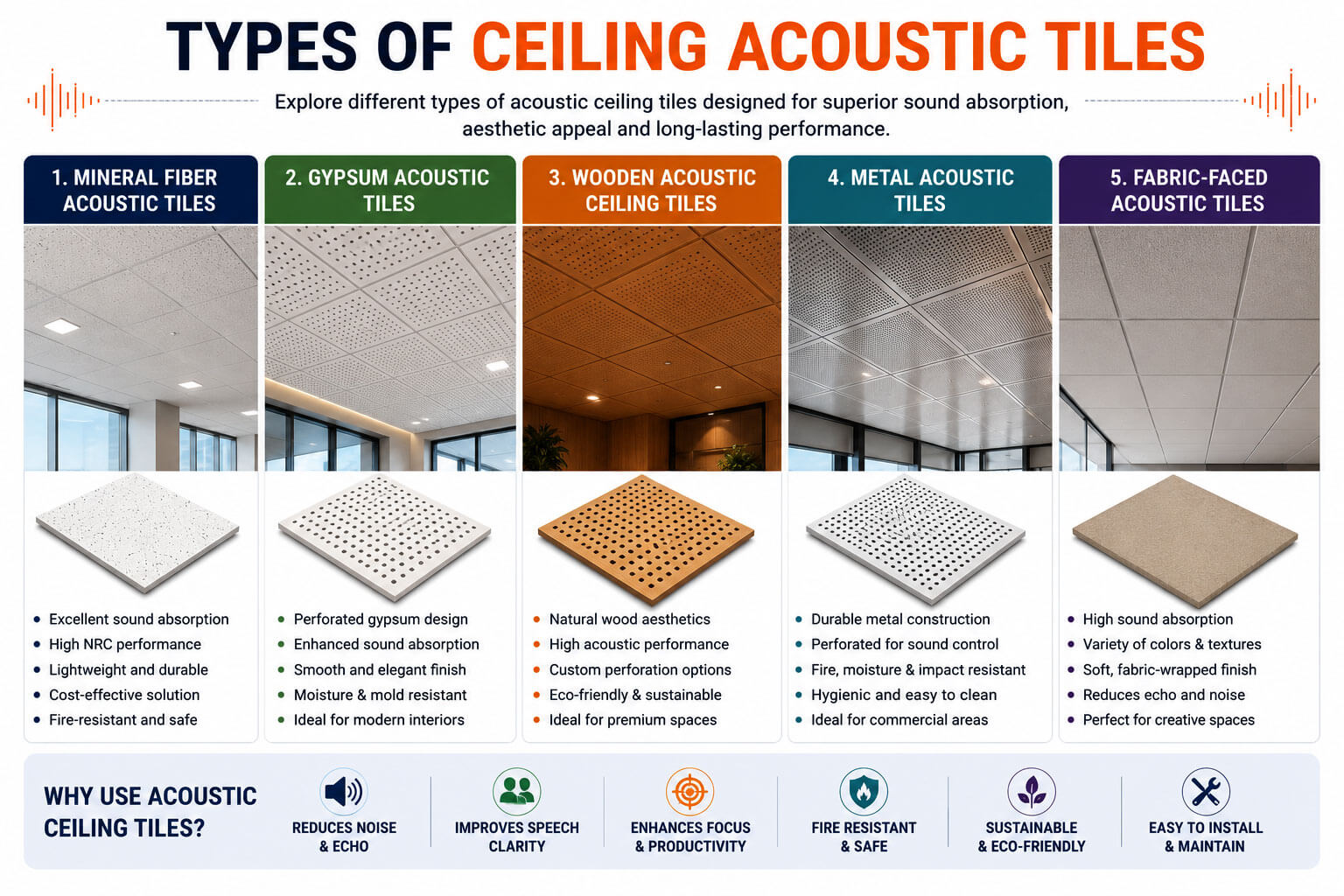
Different ceiling acoustic tile systems used for sound absorption and acoustic treatment in interior spaces.
Benefits of Ceiling Acoustic Tiles
Control Excessive Reverberation
One of the primary purposes of acoustic ceiling tiles is to absorb reflected sound and help control excessive reverberation. This can be particularly useful in rooms with large ceiling areas and multiple hard surfaces.
Support Better Speech Intelligibility
Excessive reverberation can make conversations, presentations and announcements difficult to understand. By reducing reflected sound, appropriately selected acoustic ceiling tiles can contribute to clearer speech within occupied spaces.
Improve Acoustic Comfort
A room with uncontrolled sound reflections can feel acoustically uncomfortable even when the overall noise level is not particularly high. Ceiling acoustic treatment can help create a more controlled and comfortable sound environment.
Make Use of Ceiling Area
Ceiling treatment provides an opportunity to introduce sound absorption without using additional floor space. This can be useful in offices, conference rooms and other interiors where wall space is already occupied by doors, glazing, furniture or equipment.
Support Architectural Design
Acoustic ceiling systems are available in different materials, finishes, patterns and configurations. This allows designers to consider acoustic performance together with the visual requirements of the interior.
The specific benefits and acoustic performance will depend on the selected product, coverage, installation method and room characteristics.
Applications of Ceiling Acoustic Tiles
Ceiling acoustic tiles can be considered for a wide range of spaces where reflected sound and reverberation need to be controlled.
- Corporate Offices
- Conference and Meeting Rooms
- Classrooms and Educational Institutions
- Training and Lecture Rooms
- Hospitals and Healthcare Facilities
- Hotels and Hospitality Interiors
- Restaurants and Cafés
- Auditoriums and Lecture Halls
- Theatres and Performance Spaces
- Recording and Media Spaces
- Libraries
- Religious and Community Buildings
- Retail and Commercial Interiors
The appropriate ceiling acoustic tile depends on the room's dimensions, ceiling construction, occupancy, existing finishes, acoustic objectives and interior design requirements.
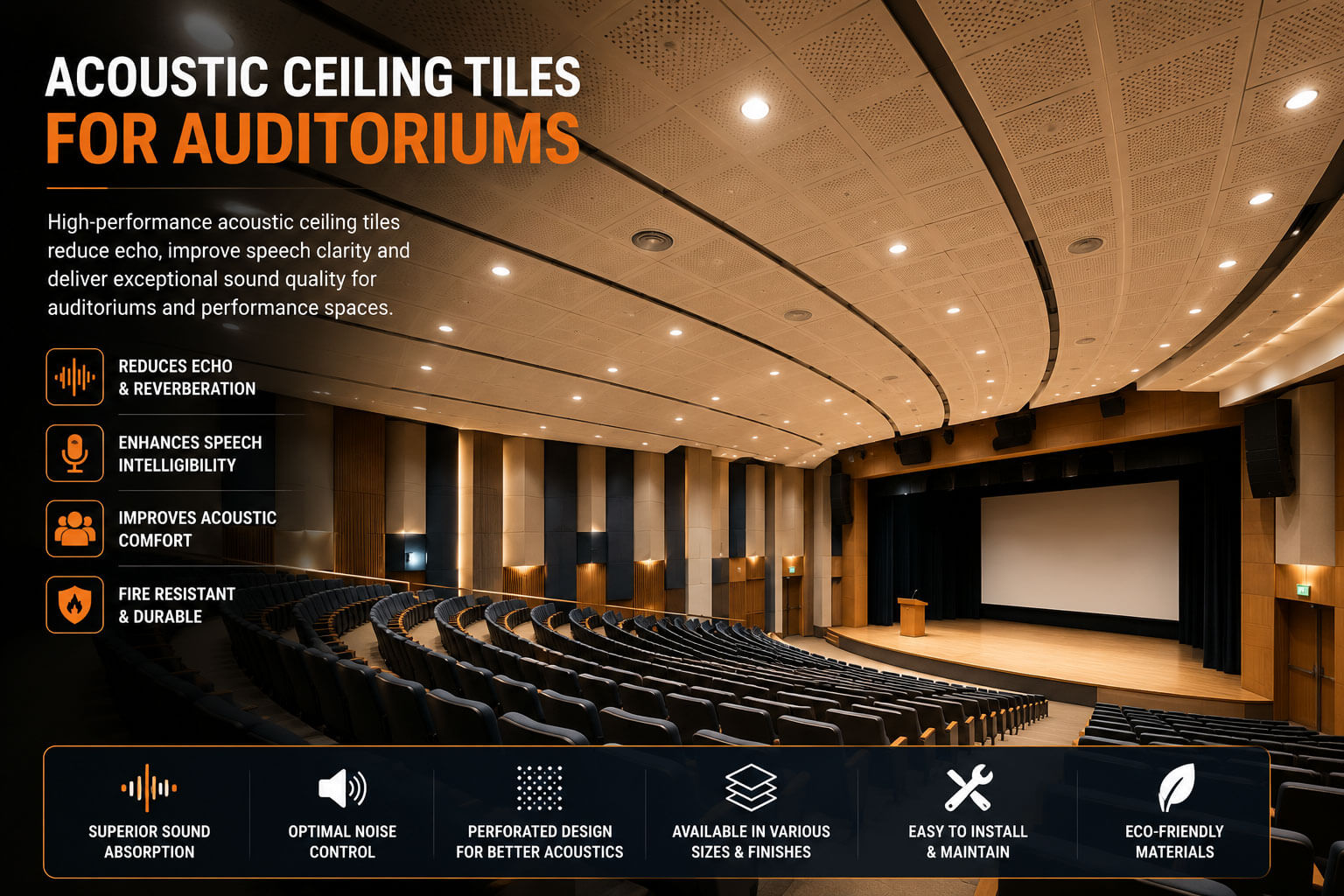
Ceiling acoustic treatment can help control reverberation in auditoriums and other large spaces.
Understanding NRC Ratings for Acoustic Ceiling Tiles
The Noise Reduction Coefficient (NRC) is a commonly used rating that indicates the sound absorption performance of an acoustic material across specified test frequencies. A higher NRC generally indicates greater sound absorption under the relevant test conditions.
However, NRC should not be considered in isolation when selecting ceiling acoustic tiles. The actual acoustic result within a room also depends on the amount of acoustic treatment, room dimensions, ceiling height, installation method, existing surfaces and the intended use of the space.
For this reason, rather than selecting a ceiling tile solely because it has a particular NRC value, project requirements should be evaluated as a whole.
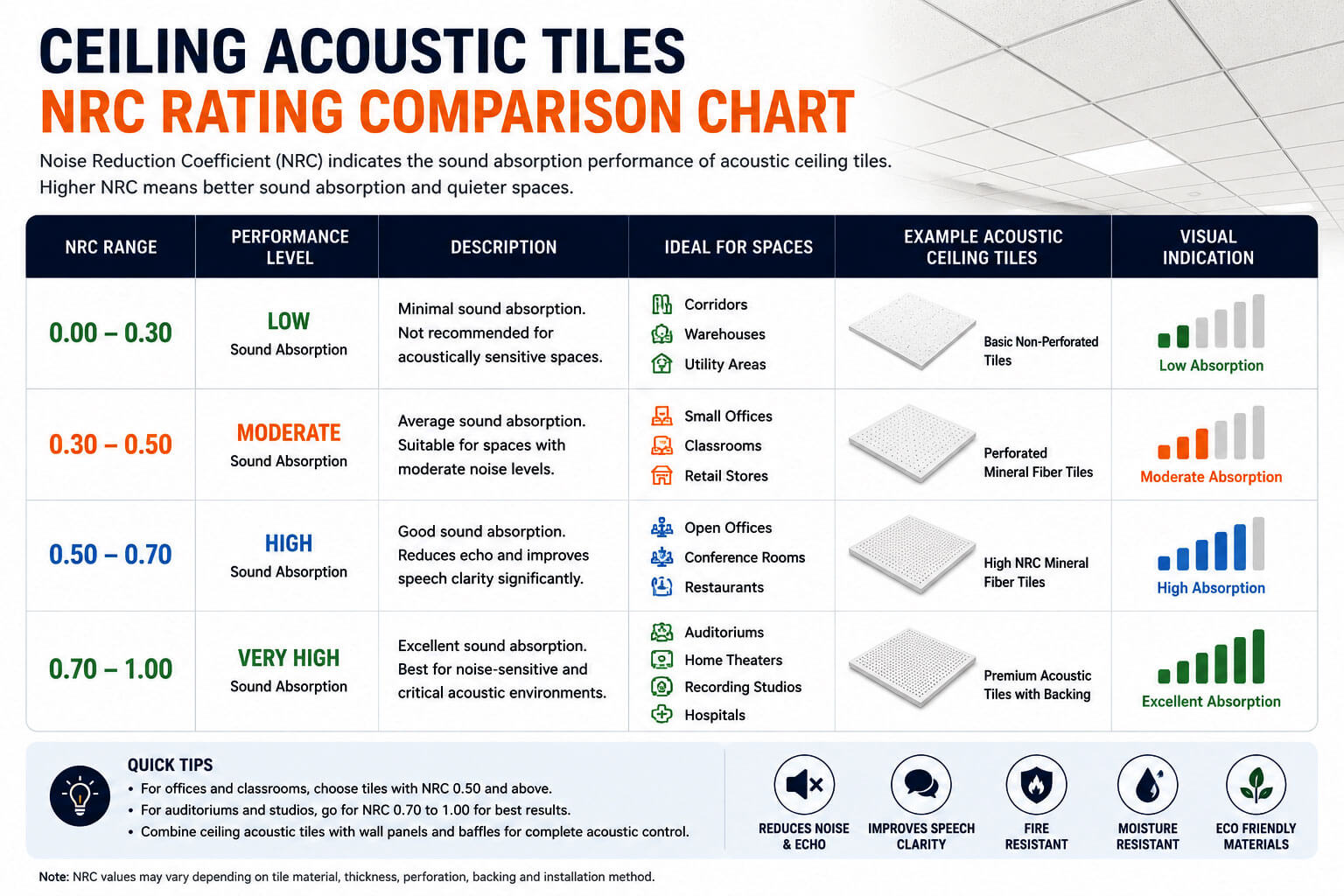
NRC is one of the factors used when evaluating sound absorption performance of acoustic ceiling tiles.
Ceiling Acoustic Tiles vs Ceiling Acoustic Panels
The terms ceiling acoustic tiles and ceiling acoustic panels are sometimes used interchangeably, but they can refer to different product formats and installation approaches.
Ceiling acoustic tiles are commonly associated with modular ceiling systems and can provide acoustic treatment across a larger ceiling area.
Ceiling acoustic panels can include directly mounted or suspended acoustic elements and may be used as individual architectural features or as part of a broader ceiling treatment system.
The right option depends on the existing ceiling, acoustic objectives, design requirements and installation conditions.
Ceiling Acoustic Tiles vs Other Acoustic Treatments
Ceiling acoustic tiles are one part of a broader range of acoustic treatment options. A ceiling-only approach may be appropriate for some rooms, while other projects may require treatment across multiple surfaces.
For example, acoustic wall panels can provide additional absorption on vertical surfaces, while hanging baffles and acoustical clouds can introduce sound-absorbing surfaces into larger or high-ceiling spaces.
For a project requiring a coordinated ceiling treatment strategy, explore our ceiling acoustic panel solutions for different commercial and architectural applications.
How to Choose the Right Ceiling Acoustic Tiles
Selecting the right ceiling acoustic tiles requires consideration of both acoustic and architectural requirements. Important factors include:
- Room function: Determine whether the space is used for meetings, teaching, presentations, hospitality, healthcare or another purpose.
- Room dimensions: Room size and ceiling height affect how sound behaves within the space.
- Required sound absorption: Consider the amount of acoustic treatment required rather than relying on the tile specification alone.
- Ceiling construction: Confirm compatibility with the existing ceiling or suspension system.
- Interior appearance: Consider colour, texture, finish, pattern and overall architectural design.
- Maintenance requirements: Select a surface and construction appropriate for the environment and expected usage.
- Fire and moisture requirements: Where applicable, check the relevant product classifications and project specifications.
- Integration with services: Consider lighting, HVAC, sprinklers and other ceiling-mounted services during planning.
For larger or technically demanding projects, acoustic requirements should be evaluated before final product selection so that the ceiling treatment is appropriate for the actual room conditions.
Ceiling Acoustic Tile Installation Considerations
The installation method depends on the type of acoustic ceiling tile and the ceiling system being used. Modular tiles are commonly installed within compatible suspended grid systems, while other acoustic ceiling products may use direct fixing, suspension or specialised mounting systems.
Before installation, the ceiling layout should be coordinated with lighting fixtures, HVAC outlets, electrical services, sprinklers and other building elements. Proper alignment and secure installation are important for both appearance and intended acoustic performance.
For project-specific installation requirements, the manufacturer's installation instructions and relevant site specifications should always be followed.
Maintenance of Acoustic Ceiling Tiles
Maintenance requirements vary according to the material and surface finish of the ceiling tile. Routine maintenance may include dust removal, careful surface cleaning and inspection for damage or displacement.
In high-traffic environments such as healthcare facilities, schools and commercial buildings, maintenance requirements should be considered when selecting the appropriate ceiling system.
Any cleaning method should be compatible with the manufacturer's recommendations to avoid damaging the acoustic surface or finish.
Selecting a Complete Ceiling Acoustic Solution
Ceiling acoustic tiles can provide effective sound absorption, but the most suitable solution depends on the acoustic characteristics of the room rather than the ceiling product alone. Room volume, reflective surfaces, occupancy, speech requirements and existing acoustic treatment should all be considered.
Where additional treatment is required, ceiling tiles can be combined with acoustic wall panels, fabric acoustic panels, hanging baffles, acoustical clouds and other sound-absorbing systems.
For a more application-focused approach, explore our ceiling acoustic panel solutions. For product information, visit our ceiling acoustic panels page.
Related Acoustic Solutions
Explore related acoustic treatment solutions from Envirco Solutions:
- Ceiling Acoustic Panels
- Ceiling Acoustic Panel Solutions
- Acoustic Wall Panels
- Fabric Acoustic Panels
- Acoustic Hanging Baffles
- Acoustical Hanging Clouds
- Wooden Acoustic Ceiling Tiles
- Auditorium Acoustic Solutions
Frequently Asked Questions
What are ceiling acoustic tiles used for?
Ceiling acoustic tiles are used to absorb reflected sound, control excessive reverberation and improve acoustic comfort and speech clarity within indoor spaces.
Where are acoustic ceiling tiles commonly installed?
They can be used in offices, conference rooms, schools, healthcare facilities, hotels, restaurants, auditoriums, libraries and other commercial or institutional interiors where sound absorption is required.
Do acoustic ceiling tiles improve speech clarity?
Yes. By absorbing reflected sound and helping control excessive reverberation, appropriately selected acoustic ceiling tiles can contribute to better speech intelligibility.
What is NRC in acoustic ceiling tiles?
NRC, or Noise Reduction Coefficient, is a rating used to indicate the sound absorption performance of an acoustic material. The appropriate NRC depends on the room, acoustic objectives, product construction and overall treatment strategy.
Can acoustic ceiling tiles be customised?
Depending on the product system, acoustic ceiling tiles may be available in different sizes, materials, colours, finishes, patterns and configurations to suit acoustic and interior design requirements.
Are ceiling acoustic tiles suitable for large spaces?
Yes. Ceiling acoustic tiles can be considered for large spaces such as auditoriums, conference halls, educational facilities and commercial interiors. Larger or more reverberant spaces may also require additional acoustic treatments such as hanging baffles, acoustical clouds or wall panels.
Round-the-Clock Client Assistance
Creative Acoustic Designs
We deliver innovative acoustic solutions blending functionality and aesthetics, enhancing sound quality while elevating the visual appeal of any interior space.
Trusted Acoustic Safety
Our acoustic solutions ensure reliable safety, combining high-quality materials and expert installation to reduce noise hazards and protect every environment.